


You cannot use this feature without first accepting 3rd Party Cookies.
You cannot use this feature without first accepting 3rd Party Cookies.

How do we help children become confident, enthusiastic mathematicians?
At Kea, we believe that every child can be successful in maths. We aim not simply to
teach children how to calculate, but to help them develop confidence, curiosity and a
positive attitude towards maths that will stay with them throughout their lives.
For many adults, maths can bring back mixed memories. It is not uncommon to hear
people say, "I was never any good at maths" or "I hated maths at school." Research from
National Numeracy found that 35% of UK adults feel anxious when faced with maths,
while almost one-third actively avoid situations involving numbers. Perhaps most
tellingly, two-thirds of adults say they only realised how important maths is once they
reached adulthood.
These attitudes matter because children often absorb the messages they hear from the
adults around them. If children grow up believing that maths is something to fear, or that
only certain people are naturally good at it, they can begin to limit themselves before
they have even had the opportunity to succeed. At Kea, we are passionate about
breaking that cycle and helping every child develop the belief that they can be
successful mathematicians.
This is something I have reflected on through my own experiences. Growing up,
whenever I needed help with maths homework, I would often turn to my dad, who had
always been confident with numbers. My mum, however, had developed the mindset
that she simply wasn't good at maths. It was a belief she had carried with her since her
own school days.
Recently, while helping my child work through a calculation, we used pieces of pasta
from the kitchen to demonstrate partitioning. As we grouped and rearranged the pasta,
my mum watched and then said, "If only I had been shown that method at school. It's so
simple – I can actually see it!" That moment perfectly highlighted the importance of
practical maths.
For many learners, understanding comes from seeing, touching,
discussing and exploring ideas rather than simply memorising procedures.
This is why hands-on learning is such an important part of our approach to
mathematics. Across the school, children regularly use practical resources such as
counters, cubes, Numicon, bead strings, place value counters and dienes equipment.
These resources help children visualise mathematical concepts, make connections and
develop a deeper understanding of number. Rather than simply learning how a method
works, children begin to understand why it works.
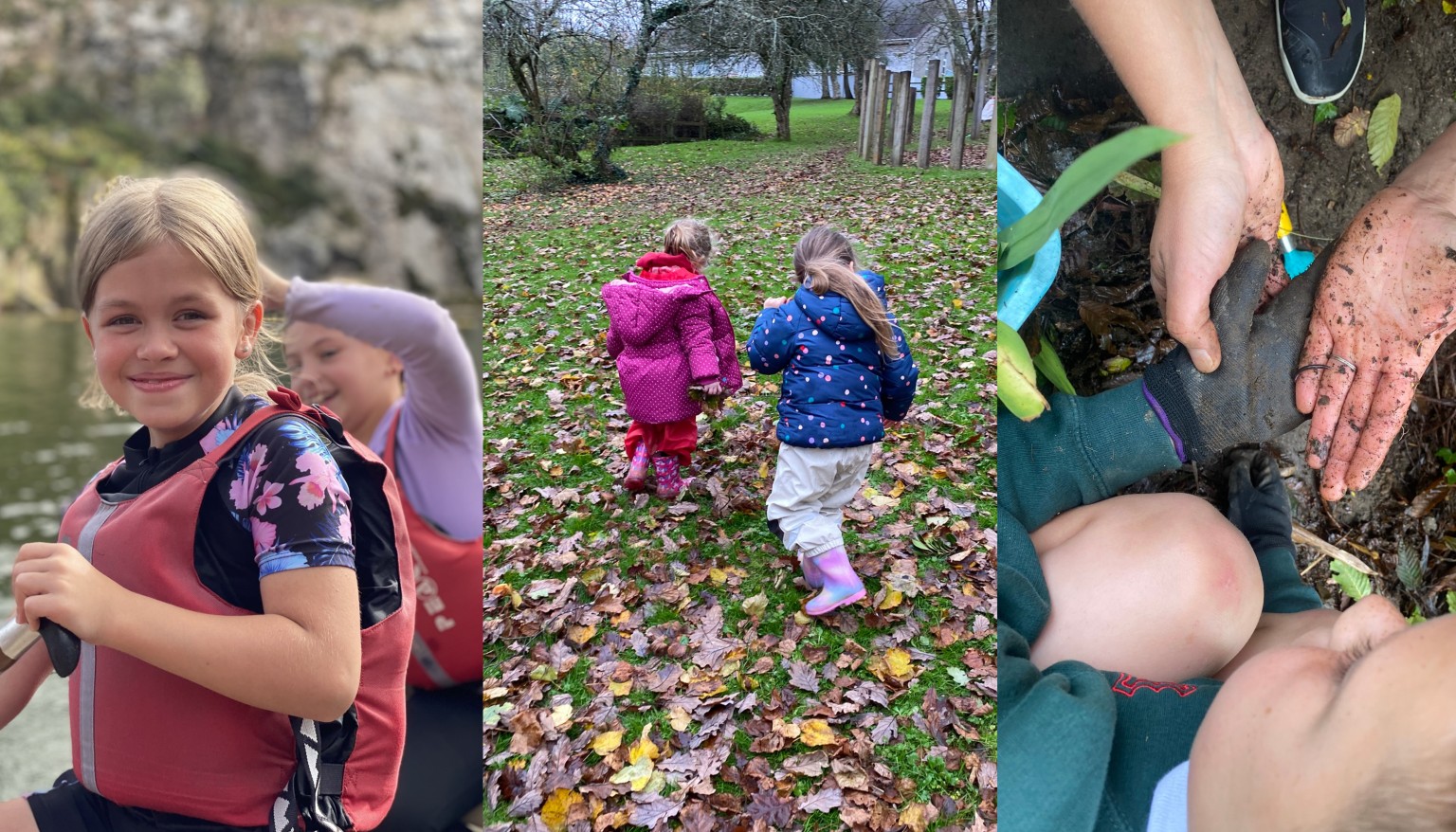
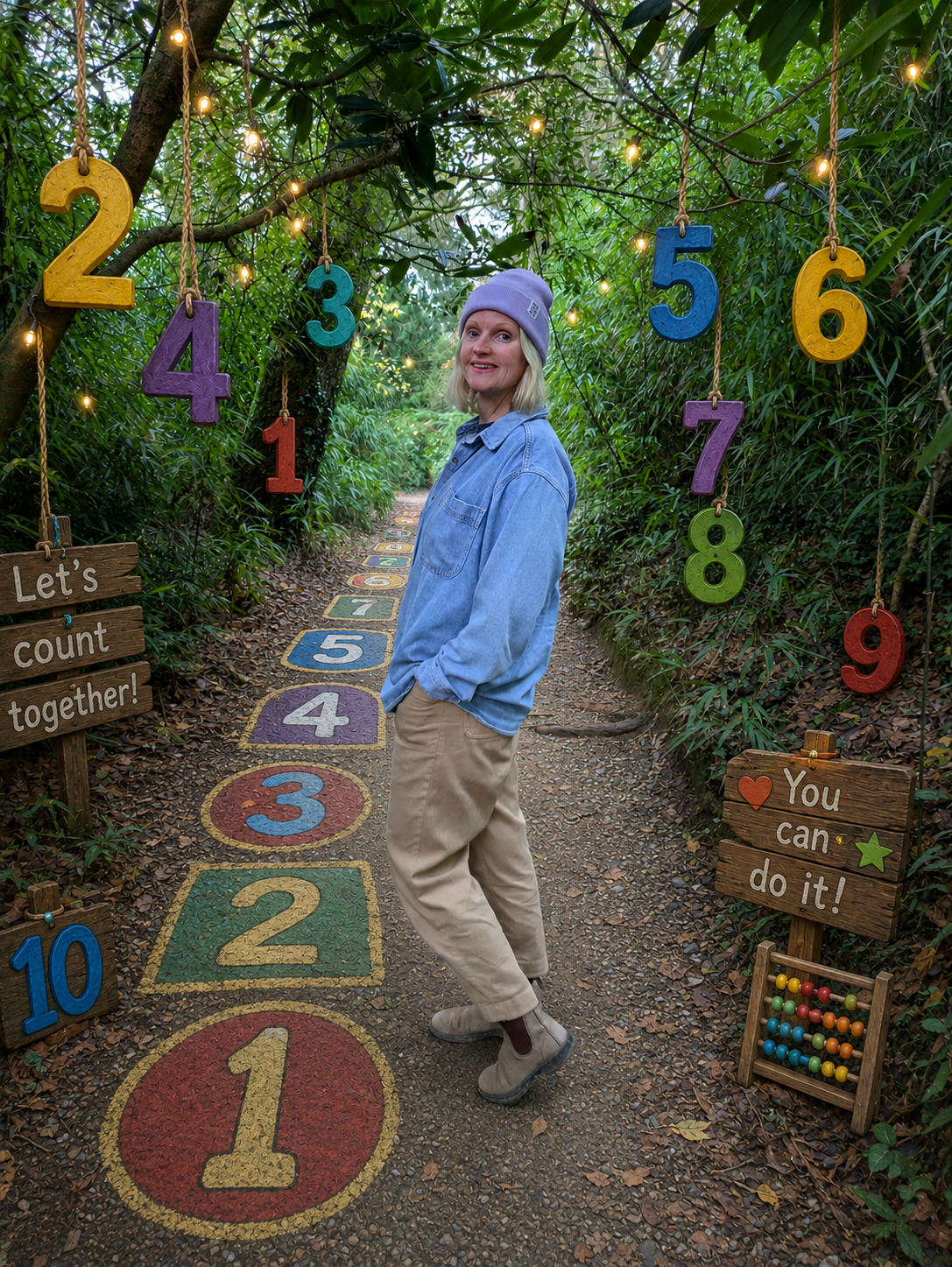
We are incredibly fortunate to have a learning environment that supports this approach.
Our school grounds provide rich opportunities for mathematical exploration beyond the
classroom. The orchard, field and wider outdoor learning spaces give children valuable
opportunities to apply their mathematical skills in meaningful, real-life contexts. They
can estimate and measure distances, collect and present data, spot patterns in nature
and work together to solve practical problems. These experiences help children see
maths as active, relevant and part of the world around them.
Outdoor learning also brings wider benefits. It promotes collaboration, communication
and resilience, while often removing barriers for learners who may find classroombased maths more challenging. For many children, learning outdoors makes
mathematical concepts more accessible, memorable and enjoyable.
We are equally fortunate to have our dedicated STEAM room, which provides a wealth of
opportunities for mathematical investigation. Packed with practical resources,
construction materials, measuring equipment and problem-solving challenges, the
space encourages children to think creatively and critically while applying their
mathematical knowledge. The STEAM room allows children to explore concepts through
experimentation and discovery, helping to deepen understanding and foster a genuine
enjoyment of learning.
In fact, a quick look through Class Dojo often provides a snapshot of maths in action
across the school. You will see children from Glover class right up to Parry measuring,
building, sorting, counting, investigating and solving problems in a wide variety of
contexts. Maths is not confined to a single lesson each day; it is woven throughout
school life and presented as a subject that is engaging, purposeful and accessible to all.
Alongside practical experiences, we place great importance on mathematical talk.
Children are encouraged to explain their thinking, justify their reasoning and discuss
different approaches with their peers. Often, it is through discussion that those allimportant "lightbulb moments" occur, when a concept suddenly makes sense and a
child's confidence visibly grows.
Most importantly, we want children to understand why maths matters. From telling the
time and managing money to making everyday decisions and pursuing future careers,
strong mathematical skills are essential throughout life.
By using practical resources, rich discussion and opportunities for exploration in our
outdoor spaces, we aim to build confident mathematicians and challenge the negative
attitudes towards maths that many adults remember.
We want every child to leave our school believing that success in maths is not about
natural ability, but about curiosity, perseverance and practice. Rather than saying, "I'm
not good at maths," we hope they have the confidence to say, "I can work it out." That
belief and growth mindset may be one of the most valuable lessons we can teach.